Postdoc studying combustion modeling, science contributor for Ars Technica, husband. Not necessarily in that order.
200 stories
·
140 followers

BLM Announces Plan to Fell Oregon's Last Great Forests

1 Comment and 2 Shares

Thanks to Brad – the subscriber who brought this story to our attention. If you have a story idea feel free to contact us directly: ask@morethanjustparks.com.

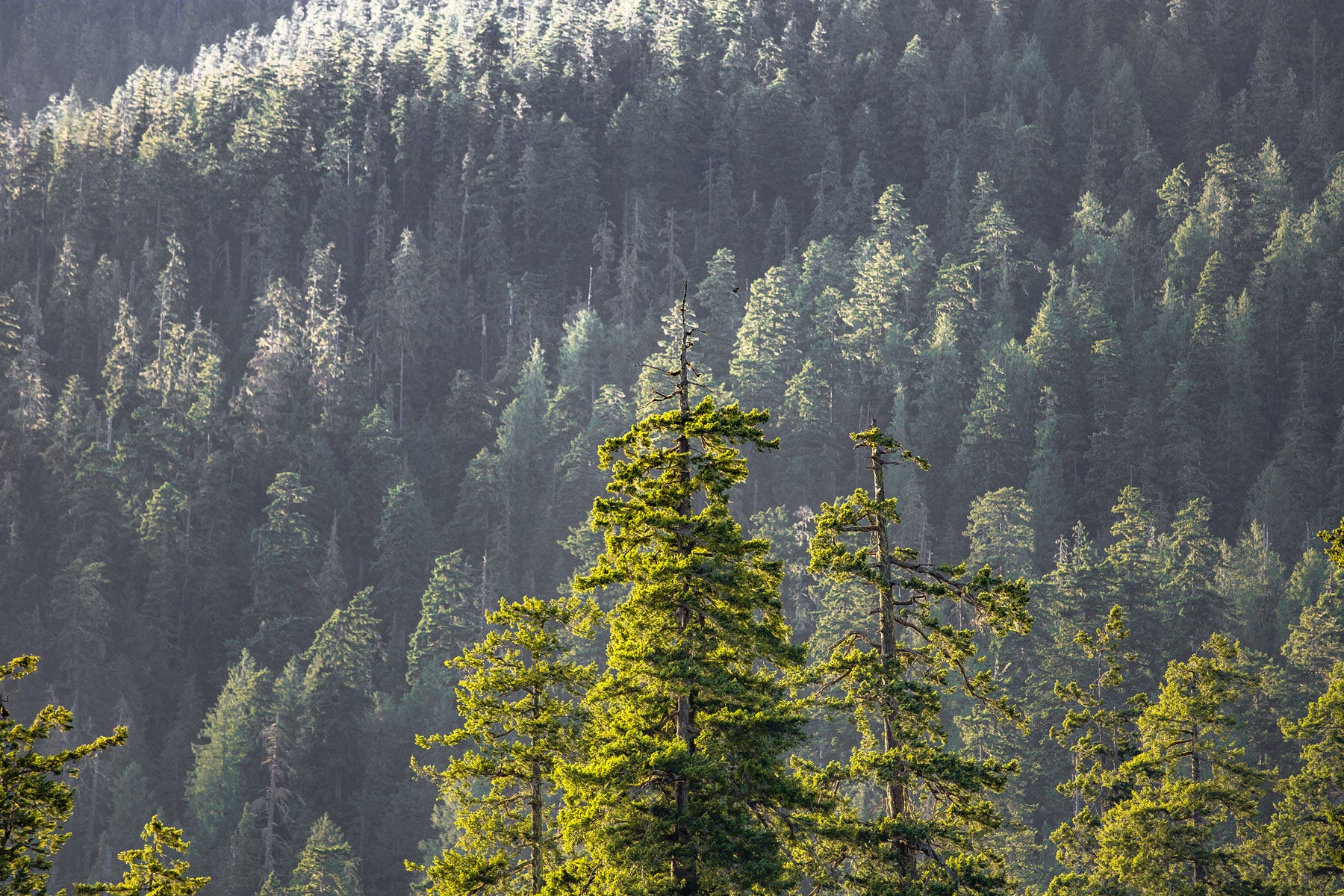
There’s a kind of forest in western Oregon that you feel before you understand. The canopy closes overhead and the light changes. The air goes cool and wet and still. Old-growth douglas fir and western red cedar rise two hundred feet, draped in moss so thick the trunks disappear beneath it. The forest floor is fern and lichen and fallen giants slowly becoming soil. You can stand in these places and feel, viscerally, that you’re inside something alive. Something that was functioning long before anyone thought to measure it and will outlast whatever we decide to do with it.

If we let it.

On February 19th, the BLM published a Notice of Intent to gut the management plans governing nearly 2.5 million acres of these forests across 18 counties. The proposal seeks to eliminate old-growth and wildlife protections to facilitate what the agency calls “maximum” logging capacity. The stated goal is to accelerate timber harvest to approximately one billion board feet per year. That’s four times current levels. It would match the peak production of the 1960s, before the Endangered Species Act existed, before anyone with authority cared whether a spotted owl or a salmon run survived the next decade.

The existing management plans were finalized in 2016. They took four years to develop. They balanced timber production with habitat protection, water quality, recreation, and the survival of species that federal law requires us to protect.

The administration wants to tear them up. And they’ve given you 30 days to say something about it.

There will be no public meetings.

The agency charged with managing one in every ten acres of land in the United States wants to fundamentally reshape how some of the most ecologically significant forests in the world are managed. And they don’t intend to look a single person in the eye while they do it.

Upgrade to Paid


What We Stand to Lose

These are some of the last remaining low-elevation old-growth forests in Oregon. They store more carbon per acre than any terrestrial ecosystem on the planet. They filter drinking water for downstream communities. They hold soil on steep slopes above salmon streams that are already in crisis. They’re home to the northern spotted owl, the marbled murrelet, coho salmon, steelhead, and hundreds of species that evolved over millennia in conditions you can’t replicate by planting seedlings in rows.

The places directly threatened by this proposal have names. The Valley of the Giants. The Sandy River corridor. The North Fork Clackamas. Mary’s Peak. Crabtree Valley. Alsea Falls. The Upper Molalla River. These aren’t abstractions on a planning map. They’re places people hike, fish, paddle, and come back to year after year. They’re places that remind us we belong to something older than ourselves, that we’re capable, as a country, of deciding some things are worth more standing than cut down.

Now the Trump Administration wants to open them all up for destruction.


The Pattern

We’ve been watching this assemble itself for months. An oil billionaire running the Interior Department who calls extractive industries his “customer.” A BLM nominee who’s publicly denounced Theodore Roosevelt for protecting land. A timber executive running the Forest Service. A corporate concessionaire tapped to lead the National Park Service. Every agency handed to someone whose career was built on opposing that agency’s mission.

You don’t install that lineup for reform. You install it for liquidation.

And this Notice of Intent is yet another one the invoices.

For the cost of a bundle of firewood a month you can help us stay on top of these fights in real time. We read the Federal Register so you don’t have to. If you can’t swing it right now, we’re glad you’re here anyway.


The O&C Lands, Explained

If you’re not familiar with the O&C lands, here’s the short version. In the early 1900s, the federal government granted millions of acres in western Oregon to the Oregon and California Railroad to encourage settlement. The railroad violated the terms of its grants by hoarding rather than selling the land. Congress revoked the grants in 1916, and in 1937 passed the O&C Act, which placed roughly 2.5 million acres of these revested lands under the Department of the Interior.

The O&C Act directed the BLM to manage these lands for sustained-yield timber production. Timber receipts were shared with the 18 counties where the lands are located, and for decades that money funded schools, roads, law enforcement, and basic services. Through the 1960s and 70s, annual harvests routinely exceeded one billion board feet. The peak came in 1964 at approximately 1.6 billion board feet. It was an era of aggressive, industrial-scale logging with virtually no environmental guardrails.

Then the science caught up. The northern spotted owl was listed as threatened in 1990. The marbled murrelet followed in 1992. The Northwest Forest Plan arrived in 1994. Harvests plummeted from over 700 million board feet in 1990 to under 100 million by 1994. County timber receipts collapsed from $109 million in 1989 to $21 million by 1995. Communities that had built their entire economies around timber were devastated.

That pain was real and shouldn’t be dismissed. Congress responded with safety net payments and the Secure Rural Schools Act, which peaked at $116 million in 2006 before declining steadily. Recent payments have hovered around $25-30 million. The 2016 Resource Management Plans attempted to strike a balance, allocating about 20 percent of O&C forestland for sustained-yield harvest while maintaining habitat protections for listed species. Last year, O&C lands produced about 267 million board feet and generated $66 million in timber receipts.

The timber industry and the Association of O&C Counties argue this isn’t nearly enough. They say the BLM is only harvesting a fraction of annual growth and violating the O&C Act’s sustained-yield mandate. They argue the forests are overstocked, fire-prone, and that increased logging would reduce wildfire risk while reviving county budgets and creating thousands of jobs.

That argument deserves a serious response. And here it is.


What the Science Actually Says

The BLM’s own prior analyses have acknowledged that industrial clearcutting and plantation management increase fire risk. Conservation groups have been pointing this out for years. A forest scientist at Oregon State University called the plan insanity, noting that these are the most effective carbon-storing forests in the world, as long as they remain intact.

Wildfire management has been used as a trojan horse by this administration and its allies in congress. It’s well known that industrial clearcutting followed by dense plantation replanting creates exactly the kind of fuel-loaded, fire-prone landscape the agency claims to be worried about. The BLM knows this. They’ve said as much in their own documents.

The proposal also calls for shrinking streamside logging buffers to as little as 25 feet. That’s not a typo. Twenty-five feet. For context, the science on protecting endangered fish like coho salmon and steelhead has consistently shown that buffers of that size are nowhere close to adequate for maintaining water temperature, preventing sediment runoff, and preserving the habitat these species need to survive.

And there’s the legal track record. Courts have repeatedly sided with conservation groups in recent years, finding that even under the significantly weakened 2016 plans, the BLM regularly violated its own rules and bedrock environmental laws to push through commercial logging projects. In one case, the agency was accused by its own former employees of fabricating analysis to justify more aggressive cuts.

That’s the agency asking for more authority. That’s the agency saying trust us with fewer guardrails.


What the Federal Register Actually Says

The language tells you everything about intent. The BLM frames the entire revision as a return to the O&C Act of 1937, treating reduced harvest levels over the past three decades as a policy failure rather than the result of science, litigation, and the plain reality that you can’t clearcut old-growth habitat and expect threatened species to survive. Two Trump executive orders we wrote about on expanding timber production are cited as justification.

The stated purpose is to seek “sustained yield of timber harvest that aligns with the historically higher levels of production.”

Historically higher levels. That’s bureaucratic language for a simple ambition – go back to a time when none of these protections existed, when the only metric that mattered was volume.

The notice identifies only two alternatives: do nothing, or manage for “maximum productive capacity.” That’s the range. The full spectrum of options being considered runs from the status quo to full industrial logging. There’s no middle ground alternative. No alternative that updates the science while modestly increasing harvest. The BLM has told you where it wants to end up.

The interdisciplinary team listed in the notice is also revealing. Forest management, fuels, GIS, fisheries, and wildlife. No recreation specialist. No hydrologist. No climate scientist. For a plan governing 2.5 million acres that directly impacts drinking water, salmon habitat, carbon storage, and outdoor recreation, that’s a pretty conspicuous set of omissions.


What You Can Do Right Now

The scoping comment period closes March 23, 2026. This is your window. Scoping comments shape the alternatives the BLM is required to analyze in its Environmental Impact Statement. If enough people demand that the agency consider alternatives that balance timber production with conservation, habitat protection, clean water, recreation, and climate, they’ll have a much harder time pretending those concerns don’t exist when this ends up in court. And it will end up in court.

Submit a comment. You can do it right now:

  • Online: ePlanning project page — click “Participate Now”

  • Email: BLM_OR_Revision_Scoping@blm.gov

  • Mail: Bureau of Land Management Oregon/Washington State Office, 1220 SW 3rd Avenue, Portland, OR 97204, Attn: Elizabeth Burghard, RMP Revision

What to say. You don’t need to be an expert. You don’t need to write a legal brief. A few sentences in your own words carry weight. But if you want to make your comment as effective as possible, here are the points that matter most:

  • Demand additional alternatives. The BLM has only proposed two: do nothing or maximize logging. Insist they analyze alternatives that increase harvest modestly while maintaining meaningful protections for old-growth, listed species, water quality, and recreation.

  • Challenge the fire argument. The BLM claims increased logging will reduce wildfire risk. The science says the opposite for industrial clearcutting and plantation management. Say so.

  • Raise the streamside buffers. Twenty-five-foot buffers are a joke for protecting endangered salmon and steelhead. The agency knows this. Call it out.

  • Defend the ACECs. The BLM is required to reevaluate all existing Areas of Critical Environmental Concern in the planning area. That’s over 100 designated areas. If you’ve visited any of them, say so. If they matter to you, say so.

  • Name the places you care about. Valley of the Giants. Mary’s Peak. Alsea Falls. The Sandy River. The North Fork Clackamas. The Upper Molalla. Personal connections to specific places carry real weight in NEPA proceedings.

  • Demand public meetings. The BLM has said it doesn’t intend to hold any. That’s unacceptable for a decision of this magnitude. Tell them.

Share this piece. The comment period is 30 days. Most people have no idea this is happening. The more people who know, the harder it is to push through quietly.

Get out there and raise hell.
Until next time,
Will

Leave a comment

Subscribe now

Read the whole story
kyleniemeyer
10 days ago
reply
These spaces are truly magical, on top of serving important ecosystem & climate roles.
Corvallis, OR
Share this story
Delete

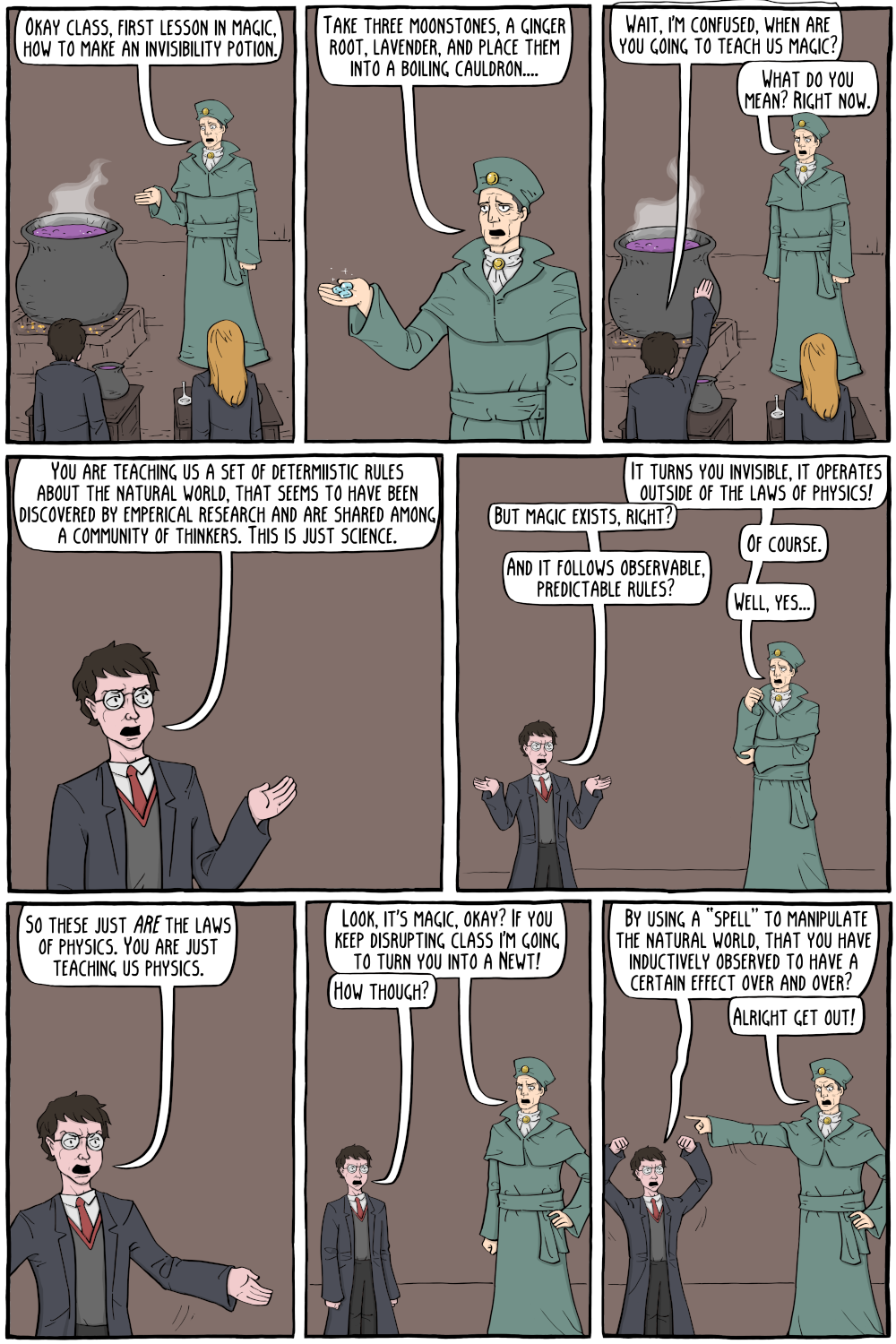
The Philosophy Of Magic

2 Comments and 8 Shares
PERSON:
Read the whole story
kyleniemeyer
758 days ago
reply
some strong HPMOR (https://hpmor.com) vibes here
Corvallis, OR
391 days ago
Learn how to invest in stocks! Invest $160 and get $6,200 In 2Hours without sending money to anyone DM ME HOW via! nute WhatsApp number:+1(332)252-4701 Text No:+1 (703) 879-8125 WhatsApp link below 👇 👇👇👇 https://wa.me/message/7L7D2AETIXNUD1
popular
760 days ago
reply
391 days ago
Learn how to invest in stocks! Invest $160 and get $6,200 In 2Hours without sending money to anyone DM ME HOW via! nute WhatsApp number:+1(332)252-4701 Text No:+1 (703) 879-8125 WhatsApp link below 👇 👇👇👇 https://wa.me/message/7L7D2AETIXNUD1
Share this story
Delete
1 public comment
seosuma
720 days ago
reply
hmm
Dhaka, Bangladesh
391 days ago
Learn how to invest in stocks! Invest $160 and get $6,200 In 2Hours without sending money to anyone DM ME HOW via! nute WhatsApp number:+1(332)252-4701 Text No:+1 (703) 879-8125 WhatsApp link below 👇 👇👇👇 https://wa.me/message/7L7D2AETIXNUD1

iOS 14 privacy settings will tank ad targeting business, Facebook warns

1 Comment
iOS 14 privacy settings will tank ad targeting business, Facebook warns

Enlarge (credit: Chesnot | Getty Images)

Facebook is warning developers that privacy changes in an upcoming iOS update will severely curtail its ability to track users' activity across the entire Internet and app ecosystem and prevent the social media platform from serving targeted ads to users inside other, non-Facebook apps on iPhones.

The next version of Apple's mobile operating system, iOS 14, is expected to hit an iPhone near you this fall. Along with its many new consumer-facing features, iOS 14 requires app developers to notify users if their app collects a unique device code, known as an IDFA (ID for Advertisers).

The IDFA is a randomly generated code that Apple assigns to a device. (Google assigns similar numbers to Android devices.) Apps can then use those codes to tie together user activity. For example, Facebook, a local shopping app, and a local weather app might all access that identifier. Facebook and other advertising businesses can then use that cross-app use data to place targeted ads for advertisers on other apps, which is what Facebook does with its Audience Network program.

The changes requiring users to opt in make the IDFA essentially useless, Facebook warned developers today. Facebook apps on iOS 14—which includes Facebook, WhatsApp, Instagram, Messenger, and a host of others—will no longer collect users' IDFA.

"Despite our best efforts, [the changes] may render Audience Network so ineffective on iOS 14 that it may not make sense to offer it on iOS 14 in the future," Facebook further explained in a blog post. "Our ability to deliver targeted ads on iOS 14 will be limited... as a result, some iOS 14 users may not see any ads from Audience Network, while others may still see ads from us, but they'll be less relevant."

Less advertising means less money, Facebook added, saying, "Because of advertisers’ reduced ability to accurately target and measure their campaigns, app developers and publishers should expect lower CPMs [i.e., views of their ads] on Audience Network and likely other ad networks on iOS."

"These updates have a far-reaching impact on the developer ecosystem," Facebook noted, which is likely to be true. Facebook also seemed to indicate displeasure that Apple acted without first consulting Facebook about its preferences, saying, "We believe that industry consultation is critical for changes to platform policies... We look forward to continuing to engage" with industry and trade groups "to get this right for people and small businesses."

The stakes

The company is almost certainly correct that users will not opt in to having their identifier tracked when presented with the option, and that absolutely will harm Facebook's Audience Network business. Regulators and privacy advocates, however, may disagree with Facebook over whether that's a bad thing.

Facebook is almost constantly under fire for how it handles different aspects of user privacy and user data. Last year it settled with the Federal Trade Commission for a record $5 billion penalty over a collection of allegations relating to users' privacy.

Facebook's ability to track anyone's online activity, anywhere, and tie it together across software and platforms has been a large part of its advertising strategy since 2013, when it acquired a product called Atlas from Microsoft for around $100 million.

As Facebook described it at the time, the acquisition provided an "opportunity" for "marketers and agencies" to get "a holistic view of campaign performance" across "different channels." In short, acquiring and building out that toolset—which has long since been fully integrated into Facebook's advertiser platform—was Facebook's key to finding the holy grail of online advertising. The company could finally track its effectiveness everywhere.

Meanwhile, the relationship between Facebook and Apple also appears to be growing more tense. Facebook last week followed in Epic Games' footsteps to take a public swipe at Apple over the 30 percent fee Apple takes of any digital purchase made through an iOS app.

Read Comments

Read the whole story
kyleniemeyer
2026 days ago
reply
oh no...
Corvallis, OR
Share this story
Delete

RIP John Conway

5 Comments and 17 Shares
1937-2020
Read the whole story
kyleniemeyer
2162 days ago
reply
Ugh. Made me tear up, when I realized what it was showing.
Corvallis, OR
popular
2162 days ago
reply
Share this story
Delete
4 public comments
laza
2160 days ago
reply
So beautiful!
Belgrade, Serbia
rraszews
2161 days ago
reply
Conway dying of the disease that we fight via social distancing feels like an O Henry twist ending.
Columbia, MD
istoner
2162 days ago
reply
Wow. Poignant.
Saint Paul, MN, USA
alt_text_bot
2162 days ago
reply
1937-2020

A letter that I did not send to my dear uncle, who sent me a climate change denial article from a right-wing copypasta content farm

2 Comments and 10 Shares
1523-4 woodblock of a skeleton playing a drum next to a well dressed man and woman

The Lady by Hans Holbein

Dear Uncle,

I guess you sent me this article because you see how worried I am about climate change on twitter and you don’t believe it’s happening. I remember you talking about the emails hacked from the Climate Research Unit at UEA several years ago, but I didn’t realize you were skeptical about the effects of climate change.

I am very sorry to say that climate change is happening. I don’t want to believe it’s true and I don’t want to believe it’s as bad as it is. My whole PhD is premised on the idea that maybe [a really important species] would be able to adapt better than our projections said because of [cool feature of their biology]. (I don’t have the answer yet, but it’s not looking promising.)

I’ve spent the last 15 years learning about biology and ecology and the natural world and participating in the scientific process and working with other scientists. Obviously, I don’t know everything and science isn’t perfect. But most of us are trying our best and aren’t out to trick anyone. I believe climate change is happening and so does nearly every scientist I’ve ever known. We have disagreements about how fast it’s happening and what its exact effects will be and if we can survive it, but we agree that it’s going to be very, very bad.

I’m so convinced climate change is happening that I spend a great deal of time that I should be working on my PhD or that I could be doing things I love like reading novels and dancing instead writing letters to politicians and advocating for policies that would help slow climate change or at least help us adapt. I’m so convinced that I cry about it and am terrified about the world I’ll grow old in. I’m so convinced that I’ve tried to convince my mother to move (and I think you all probably should as well, especially your kids) because the southeast is going to get so much hotter and flood and fire prone during my lifetime that it’s going to severely disrupt the economy and make people very sick.

And I’m not alone. The news doesn’t spend a lot of time talking to scientists about how they feel personally about climate change, but it’s bleak. We give dry presentations and cry together over dinner at how many plants died at our study sites. We talk about fears for our children or choosing not to have them. I’m afraid of what the world is going to be like in 20 years and I’m grieving the ecosystems dying right in front of us.

The article you sent me says that the recent National Climate Assessment is based on cherry picked data and bad models and bad science and that fossil fuels have done a lot of good. It claims that all this noise about climate change is just a ploy to control politics. It isn’t, though an emergency of this scale really should affect politics.

The climate models were right before the internal combustion engine was invented

I know it can seem like everything about climate change is based on these overly complex computer models run by scientists who only care about getting their next grant, but those computer models are just fiddly details.

We knew that using fossil fuels and such could cause global warming from before the US Civil War – more than 150 years before we were able to build the complex global models of climate that we’re now using to figure out exactly how global warming will change regional and local climates.

The earliest calculations of how much carbon dioxide warmed up the planet were done by a Swedish scientist in the 1890s. His predictions weren’t perfect, but they’re not that far off from our current models. And the simple computer models we built in the 70s and 80s predict basically the same global temperature increase as the highly complex ones we have today.

(We keep building more and more complex models with more and more things because we are trying to understand more and more local effects and also feedback cycles – what does it mean for the world to warm 2 or 6 or 10 degrees? When will the ice melt? How will that affect ocean currents? How will the ocean currents full of meltwater affect the speed and sinuousness of the jetstream? Will the southwest get wetter or drier? Will there be more hurricanes or fewer? What could the economic impacts be?)

Perhaps that snippet of scientific history hasn’t convinced you to take climate change seriously. After all, even if we know that carbon dioxide and other greenhouse gases heat up the planet, maybe we’ve done our math wrong and it’s actually much slower than we think.

But what if the models are wrong and climate change isn’t a big deal?

So, what if the models are wrong about how much and how fast climate change is happening? We need to compare the risk of inaction vs action if we’re right and if we’re wrong.

What is the risk of inaction if we are right about the magnitude and speed of climate change impacts? Well, you could read the fourth NCA to find out! It does not, as the article you sent me put it “sound like something kicked around in a Hollywood brainstorming session for a science fiction thriller.” It is sober and measured and accessible – and ultimately very conservative in its discussion of potential impacts. Here’s a representative snippet from the chapter on climate change impacts occurring and expected in the Southeast

Embedded in these land- and seascapes is a rich cultural history developed over generations by the many communities that call this region home. However, these beaches and bayous, fields and forests, and cities and small towns are all at risk from a changing climate. These risks vary in type and magnitude from place to place, and while some climate change impacts, such as sea level rise and extreme downpours, are being acutely felt now, others, like increasing exposure to dangerously high temperatures—often accompanied by high humidity—and new local diseases, are expected to become more significant in the coming decades.

If our models are right and we don’t do anything, the impacts from climate change will be big and bad this century and downright apocalyptic in the next. The only reason not to act would be if you believe the impacts of trying to slow or stop climate change are worse than the risks from climate change itself.

The biggest things we can to do as a society to slow climate change are:

  • educate girls and make sure women have access to contraceptives and reproductive healthcare, including abortion
  • change the kind of chemicals we use as refrigerants (like in air conditioners) (and switch as many of them as we can to things like ground source heat pumps).
  • switch electricity generation from coal and natural gas to solar and wind as fast as we can, reducing air pollution in the process and creating a bunch of jobs
  • Eat more beans and less red meat while wasting less food – cheaper and healthier!
  • Stop burning tropical forests – most are being burnt to grow soybeans to feed cows, so this is almost a natural outcome of the previous goal
  • Bring back silvopasture farming techniques – supporting small farmers and rural areas and loosening the exploitation by companies like Smithfield.

None of these have costs higher than the ones our models predict climate change will exact, in dollars, in lives, in social and cultural disruption. Most are actually things we’d want to do regardless of climate change. Many negative effects are things that are happening anyway.

Consider what happens

If we don’t act and the models are right, we face a serious existential threat. Over the next centuries, billions of people will die in extreme weather events, wars, and famines, the economy will collapse worldwide, we could lose a great deal of technology and civilization, and could even go extinct. Large parts of the tropics and subtropics will become uninhabitable and billions will be forced to migrate by rising sea levels and increasing temperatures. Immigration by climate refugees will completely overwhelm many countries. Many, many species will go extinct.

If we don’t act and the models are wrong, we gradually decarbonize the economy anyway while demographic, habitat destruction, and agricultural problems continue unabated. The transition to solar and wind will continue, relatively slowly, because technology has advanced already to the point that it’s cheaper than at least coal already. As fossil fuels are gradually depleted and renewable tech continues to improve, the transition will speed up. This will gradually reduce the millions of deaths every year due to air pollution. Depending on the speed of transition, we will have to retrain or support people and communities who used to be dependent on fossil fuel extraction – or consign them to lives of poverty and us all to political unrest. Hundreds of millions more women will have children they weren’t ready to have and lack education and opportunities, holding back their countries’ political and economic development. Industrial agriculture will continue to destroy habitat and small farms and suck resources out of rural areas. The loss of rainforests will cause the loss of many incredible species and result in changes to global weather patterns that could devastate some agricultural regions. Obesity and metabolic diseases will continue to increase, along with associated healthcare costs.

If we act and the models are right, we’re still going to continue to see a lot of climate change impacts because we’ve just waited too long to act, but the effects won’t be so catastrophic. Fewer people will die in extreme weather events or of starvation, and immigration will be less overwhelming because fewer people will have to flee sea level rise and increasingly inhospitable climates. We will save millions of lives every year just from the reduction in air pollution from transitioning to solar and wind. Many jobs will be created in order to rapidly transition to solar and wind and improve energy efficiency in buildings. We will have to retrain or support people and communities who used to be dependent on fossil fuel extraction – or consign them to lives of poverty and us all to political unrest. More people will use affordable heat pumps or safe refrigerants to cool (and heat) their homes than before. Dietary improvements in the west will extend lives and reduce healthcare costs from metabolic disease. Population growth will slow, helping countries in the global south reduce emigration and stabilize their political systems. We will lose rare desert habitat to solar farms and some birds to wind farms, but much less than unmitigated climate change would have caused. Switching so rapidly to renewable energy with today’s technology will mean a lot of mining for rare earth minerals, which will likely cause large areas of environmental destruction in parts of the American west and China – much as uranium mining and coal mining did in the previous century.

If we act and the models are wrong, we will make improvements in agriculture, public health, political stability in tropical and subtropical countries, gender equality, and environmental protection, at the expense of some resource extraction communities. We will deal with the necessary transition away from fossil fuels earlier than we needed to to avoid climate change impacts, possibly with technologies that aren’t as advanced as they would have been had we waited. However, we will save millions of lives every year just from the reduction in air pollution from transitioning to solar and wind. Many jobs will be created in order to rapidly transition to solar and wind and improve energy efficiency in buildings. We will have to retrain or support people and communities who used to be dependent on fossil fuel extraction – or consign them to lives of poverty and us all to political unrest. More people will use affordable heat pumps or safe refrigerants to cool (and heat) their homes than before. Dietary improvements in the west will extend lives and reduce healthcare costs from metabolic disease. Population growth will slow, helping countries in the global south reduce emigration and stabilize their political systems. We will lose rare desert habitat to solar farms and lots of birds to wind farms. Switching so rapidly to renewable energy probably will mean a lot of mining for rare earth minerals, which will cause environmental destruction in parts of the American west and China – much as uranium mining and coal mining did in the previous century. Many species are saved in the rainforests.

You believe that the models are wrong and we we shouldn’t act. You’re afraid that the models are wrong and we will act.

But your fear is actually the very best outcome: the very best situation is if we act to stop climate change and we are wrong about climate change. Acting to stop climate change makes the world better even if climate change doesn’t happen.

(The above assumes, of course, that the models are overpredicting climate change impacts. We are very likely under-predicting the impacts of climate change. Choosing what to do, what to prioritize, if climate change is going to be much worse than we imagine is another discussion.)

I don’t think any of these futures are easy, even the ones where everyone does exactly what I think is politically right and things go perfectly according to plan. We have waited so long to act to stop climate change that we now have to act very fast and no matter what we’ll do, bad things will happen. Fast change is very hard and disruptive. We’re going to face fast change no matter what, but we have a choice, now about what that change looks like. We can choose the change and we can get our collective butts in gear, or we’ll be swept away by changes we didn’t see coming, alone.

What if there were no models?

But perhaps you believe any model of climate change is just wrong. (They are, of course. The only perfect model is the thing itself, but you’re not going to throw out all your maps because they don’t have every pothole in the road on them.)

So then – imagine that we don’t have any of these climate models.

We still know that some gases like carbon dioxide and methane hold more heat than others because anyone can figure that out with some sunshine and bottles filled with different gases on a sunny day and a couple thermometers.

But if no one ever built the kinds of models predicting what adding lots and lots of greenhouse gases to the atmosphere would do, then what should we do if we just don’t know what the result of dumping greenhouse gases in the atmosphere will be?

I believe we must act very cautiously. We only have one planet. It is foolish and selfish to take more than the smallest of risks with it.

If we don’t know how much greenhouse gases will warm up our planet or what warming up a planet will do to climate, we just shouldn’t do it until we do understand. Experimenting with the only planet we can currently survive on does not seem sensible.

In our climate-model-less world, we also still know that climate is a complex dynamical system, like the human brain or the power grid, where small changes in one part of the system can cause rather larger changes in another. Bigger changes are quite likely to cause bigger changes. In a world without global climate models, we would want to be very wary of changing levels of temperature-changing gases in our atmosphere much at all.

If we know that greenhouse gases can cause global warming and we know that the global climate system can behave unpredictably, then even if we don’t know how or why or how much change those gases cause, it is irresponsible and dangerous to continue increasing greenhouse gas concentrations.

I want us to fix climate change, but I don’t want you to feel like this

Academics get accused of elitism all the time. And some of that is completely warranted. This next bit is elitist.

I want everyone to take climate change seriously because we have waited so long and so must do so much, so fast to stave off the most unthinkable effects. But part of me doesn’t want to convince you, my dear uncle.

Changing your mind, individually, probably won’t make much difference to whether we get a Green New Deal or not.

But understanding what climate change impacts will look like is horrifying and painful. You’re old enough and well-off enough that you and Aunt ____ will probably be fine as long as your AC keeps going and you don’t move to the coast. I don’t want you to spend the rest of your life terrified for my cousins and your new grandbaby, mourning the changes to the land you love as trees and animals migrate and change and die.

So I’m not going to send you this letter, I’m not going to try to convince you that climate change is real. Facing it is like facing death, and of course I would spare you that if I could.

So live your life, blissfully ignorant and cheerful on the phone about the strange weather lately. Live free from the fear that everything you’ve contributed to and cared about in your life will be gone so soon and live free from the guilt that you supported the political and economic choices that may kill us all.

Read the whole story
kyleniemeyer
2581 days ago
reply
This. So much this.
Corvallis, OR
2376 days ago
https://keramatzade.com/Earn-wealth-with-amazing-business-ideals https://keramatzade.com/Law-of-Attraction-of-Wealth https://keramatzade.com/Ways-to-make-money https://modirebimeh.ir/online-calculation-of-iranian-life-insurance/ https://modirebimeh.ir/engineers-professional-liability-insurance/ https://modirebimeh.ir/third-party-insurance-calculation/ https://modirebimeh.ir/iran-liability-insurance-have-you-not-yet-insured-your-business-with-iran-liability-insurance/ https://modirebimeh.ir/iran-life-insurance-ganji-for-the-future-of-children-and-families/ https://modirebimeh.ir/iran-car-body-insurance-the-best-and-most-prestigious-in-the-iranian-insurance-industry/ https://modirebimeh.ir/the-most-reliable-and-unrivaled-third-party-car-insurance-in-iran/ https://keramatzade.com/14-ways-to-increase-revenue https://keramatzade.com/8-ways-to-increase-revenue https://keramatzade.com/25-jobs-with-which-you-can-earn-up-to-a-million-dollars https://keramatzade.com/success-secret-1 https://keramatzade.com/Make-Money-Online-Effective-step-by-step-money-making-techniques https://keramatzade.com/Make-money-at-home https://keramatzade.com/Ways-to-make-money-without-capital https://keramatzade.com/Creative-Money-Making-Ideas https://keramatzade.com/The-law-of-attracting-money https://keramatzade.com/Ways-to-Make-Money-at-Home https://keramatzade.com/Immediate-absorption-of-wealth-in-10-minutes-and-attractive-ways-to-get-rich https://keramatzade.com/The-secret-of-attracting-money-in-Iran-to-achieve-creative-money-maker-ideas https://keramatzade.com/Ways-to-get-rich-in-Iran-with-the-most-wonderful-business-ideas https://keramatzade.com/Astonishing-economic-intelligence-test-to-increase-financial-intelligence
ChrisDL
2581 days ago
reply
I wrote basically this exact email to my uncle. The rest of my family were not amused and felt like I should go easy on him.
New York
2376 days ago
https://keramatzade.com/Earn-wealth-with-amazing-business-ideals https://keramatzade.com/Law-of-Attraction-of-Wealth https://keramatzade.com/Ways-to-make-money https://modirebimeh.ir/online-calculation-of-iranian-life-insurance/ https://modirebimeh.ir/engineers-professional-liability-insurance/ https://modirebimeh.ir/third-party-insurance-calculation/ https://modirebimeh.ir/iran-liability-insurance-have-you-not-yet-insured-your-business-with-iran-liability-insurance/ https://modirebimeh.ir/iran-life-insurance-ganji-for-the-future-of-children-and-families/ https://modirebimeh.ir/iran-car-body-insurance-the-best-and-most-prestigious-in-the-iranian-insurance-industry/ https://modirebimeh.ir/the-most-reliable-and-unrivaled-third-party-car-insurance-in-iran/ https://keramatzade.com/14-ways-to-increase-revenue https://keramatzade.com/8-ways-to-increase-revenue https://keramatzade.com/25-jobs-with-which-you-can-earn-up-to-a-million-dollars https://keramatzade.com/success-secret-1 https://keramatzade.com/Make-Money-Online-Effective-step-by-step-money-making-techniques https://keramatzade.com/Make-money-at-home https://keramatzade.com/Ways-to-make-money-without-capital https://keramatzade.com/Creative-Money-Making-Ideas https://keramatzade.com/The-law-of-attracting-money https://keramatzade.com/Ways-to-Make-Money-at-Home https://keramatzade.com/Immediate-absorption-of-wealth-in-10-minutes-and-attractive-ways-to-get-rich https://keramatzade.com/The-secret-of-attracting-money-in-Iran-to-achieve-creative-money-maker-ideas https://keramatzade.com/Ways-to-get-rich-in-Iran-with-the-most-wonderful-business-ideas https://keramatzade.com/Astonishing-economic-intelligence-test-to-increase-financial-intelligence
popular
2580 days ago
reply
2376 days ago
https://keramatzade.com/Earn-wealth-with-amazing-business-ideals https://keramatzade.com/Law-of-Attraction-of-Wealth https://keramatzade.com/Ways-to-make-money https://modirebimeh.ir/online-calculation-of-iranian-life-insurance/ https://modirebimeh.ir/engineers-professional-liability-insurance/ https://modirebimeh.ir/third-party-insurance-calculation/ https://modirebimeh.ir/iran-liability-insurance-have-you-not-yet-insured-your-business-with-iran-liability-insurance/ https://modirebimeh.ir/iran-life-insurance-ganji-for-the-future-of-children-and-families/ https://modirebimeh.ir/iran-car-body-insurance-the-best-and-most-prestigious-in-the-iranian-insurance-industry/ https://modirebimeh.ir/the-most-reliable-and-unrivaled-third-party-car-insurance-in-iran/ https://keramatzade.com/14-ways-to-increase-revenue https://keramatzade.com/8-ways-to-increase-revenue https://keramatzade.com/25-jobs-with-which-you-can-earn-up-to-a-million-dollars https://keramatzade.com/success-secret-1 https://keramatzade.com/Make-Money-Online-Effective-step-by-step-money-making-techniques https://keramatzade.com/Make-money-at-home https://keramatzade.com/Ways-to-make-money-without-capital https://keramatzade.com/Creative-Money-Making-Ideas https://keramatzade.com/The-law-of-attracting-money https://keramatzade.com/Ways-to-Make-Money-at-Home https://keramatzade.com/Immediate-absorption-of-wealth-in-10-minutes-and-attractive-ways-to-get-rich https://keramatzade.com/The-secret-of-attracting-money-in-Iran-to-achieve-creative-money-maker-ideas https://keramatzade.com/Ways-to-get-rich-in-Iran-with-the-most-wonderful-business-ideas https://keramatzade.com/Astonishing-economic-intelligence-test-to-increase-financial-intelligence
Share this story
Delete

Seven Years

10 Comments and 39 Shares
[hair in face] "SEVVVENNN YEEEARRRSSS"
Read the whole story
kyleniemeyer
3014 days ago
reply
😭
Corvallis, OR
popular
3012 days ago
reply
Share this story
Delete
9 public comments
chrisrosa
3012 days ago
reply
😢
San Francisco, CA
rjstegbauer
3013 days ago
reply
Touching and beautiful! One of your best.
alt_text_bot
3014 days ago
reply
[hair in face] "SEVVVENNN YEEEARRRSSS"
ameel
3014 days ago
reply
<3
Melbourne, Australia
MaryEllenCG
3014 days ago
reply
::sniffle::
Greater Bostonia
louloupix
3014 days ago
reply
That's why I still watch it..Time to time they deliver...
[deleted]
3003 days ago
j'ai toujours autant de mal à comprendre la trame...
marcrichter
3014 days ago
reply
Awesome. I'm speechless.
tbd
deezil
3014 days ago
reply
OKAY I'M CRYING AT MY DESK NOW.
Shelbyville, Kentucky
sfrazer
3014 days ago
God damnit, Randal.
deezil
3014 days ago
For those that don't know the whole story: Approximately 7 years ago (imagine that) Randall posted this on the blog https://blog.xkcd.com/2010/11/05/submarines/ and made some vague references to tough times in the comics. On in to 2011, he posted this on the blog, and things seemed to be scary but hopeful. https://blog.xkcd.com/2011/06/30/family-illness/ . He's made mention several times about it over the years inside the comics, and I really believe that "Time" was made for some express purpose as to get his emotions out. But this update seriously is making a grown 32 year old man weep openly at his desk (thankfully I have a door that closes), as I always wondered how things were. Things look good, and this makes my heart happy.
effingunicorns
3014 days ago
reply
it's been kind of A Day so I'm not afraid to admit I cried
jlvanderzwan
3013 days ago
Had the same with the previous comic, that this one references. I felt so much relief when I reached the end of this one...
jlvanderzwan
3013 days ago
Links for the new readers: https://xkcd.com/881/, https://xkcd.com/1141/
jlvanderzwan
3013 days ago
These are also related but more humorous in nature: https://xkcd.com/933/, https://xkcd.com/996/
jlvanderzwan
3013 days ago
And this one explains how the experience of dealing with cancer "works": https://xkcd.com/931/
gordol
3013 days ago
As someone who is now officially a cancer survivor, this one hits home.
Next Page of Stories